ResearchSide effects
Research & evidence
How does exercise minimize cancer treatment side effects?
Fatigue, muscle loss, bone density, nausea, sleep and mood — the mechanism in each case, and how strong the evidence is.
Every two years the CETI curriculum is opened up and partially rewritten. Not every page — the anatomy has not changed, and rewriting what is still true would be a waste of everyone’s time. What gets rewritten is every section the evidence has moved, plus whatever new material the field now demands. That revision is reviewed by a medical advisory board of twenty-three clinicians across nine countries, and then every specialist is examined on it again.
This is the fifteenth edition. Here is what changed.
This section is entirely new, and it exists because the conversation is happening whether or not the profession is equipped for it. A large share of people in cancer treatment use some form of complementary medicine, and most of them do not tell their oncologist. They will, however, mention it to the person they see three times a week.
The material covers the main modalities a specialist will actually encounter — acupuncture, massage and manual therapies, mind–body practices, herbal and botanical supplements — and separates them along the line that matters: what has reasonable supporting evidence for symptom management, what is neutral, and what carries a real interaction risk with active treatment.
The point is not to endorse or dismiss. It is to stop specialists from doing the two things that cause harm here: repeating claims they can’t support, and dismissing a client’s choices so flatly that the client stops mentioning them at all. The single most useful thing in the section is when to say “please tell your oncology team about that.”
Also new. Culinary medicine is the practical end of nutrition science — not what someone should eat in principle, but what they can actually cook and get down during treatment.
It matters more than it sounds. Treatment-related taste changes, mouth sores, nausea and appetite loss defeat perfectly good nutrition advice every day. A protein target is useless to someone for whom everything tastes metallic. This section covers food preparation strategies that work around specific side effects, texture and temperature modification, protein-forward approaches for people who can’t face a full meal, and food-safety considerations for clients who are immunocompromised.
It also sets a boundary. An OncoVie® Cancer Exercise Specialist is not a dietitian and is not writing meal plans as medical nutrition therapy. What the section provides is enough grounding to have a useful conversation and to know when the answer is a referral.
Two years ago this section did not exist. It now does, because a meaningful share of the clients walking into a specialist’s practice are taking semaglutide or tirzepatide, and the interaction between those medications and cancer treatment is a live question rather than a settled one.
What the new material covers is narrow and deliberate: what these drugs do, what is currently known about their relationship to cancer risk in both directions, what happens to lean mass when someone loses weight rapidly during or after treatment, and — the part that matters most in practice — why resistance training becomes more important, not less, for a client on a GLP-1 agonist.
What it does not do is take a position on whether a client should be taking one. That is not a fitness professional’s call, and the edition says so explicitly.
Hereditary cancer syndromes — BRCA1 and BRCA2, Lynch syndrome, Li-Fraumeni and the rest — used to be covered in passing. They now have their own treatment, for a straightforward reason: the population of people who have had risk-reducing surgery without ever having had cancer is growing, and they end up in front of exercise professionals who don’t have a category for them.
A woman who has had a prophylactic bilateral mastectomy and reconstruction has the same postsurgical considerations as a woman treated for breast cancer, and none of the treatment history. She is not a cancer patient and she is not an ordinary client. The edition now says what to do with her.
The point of revising every two years is not that the anatomy changed. It’s that the people in front of you did.
The largest volume of change, as always, sits here. Surgical technique moves faster than most people outside oncology realize, and a specialist working from a 2020 description of what a mastectomy involves is working from something that is no longer reliably true.
This edition updates the material on reconstruction approaches and their implications for shoulder mechanics, on sentinel node biopsy versus fuller axillary dissection and the very different lymphedema risk profiles that follow, and on immunotherapy side effects — which behave differently from chemotherapy side effects, on a different timeline, and are still routinely misread as deconditioning.
The nutrition section has been the weakest part of most oncology exercise curricula, including, historically, parts of this one. It has been rebuilt around what oncology nutrition science actually supports — protein requirements during treatment, the evidence on specific dietary patterns, what to say when a client arrives having read that sugar feeds cancer, and where the professional boundary sits between general nutrition guidance and medical nutrition therapy.
That boundary is drawn firmly. An OncoVie® Cancer Exercise Specialist is not a dietitian, and the edition is clearer than previous ones about when to refer.
Revisions remove as well as add. Several protocol recommendations that were standard guidance a decade ago have been cut because the evidence behind them did not hold — the most notable being the residual caution around upper-body resistance work after axillary surgery, which persisted long after the research on lymphedema had moved on.
Removing outdated material is the harder half of the work. It is also the part that a credit-and-fee renewal model has little reason to do, because nothing is re-examined and so nothing surfaces.
If you hold a CETI qualification from 2024 or earlier, none of the above is in your copy. Renewal gives you the full 15th Edition, the updated video presentations and lecture material, and a 50-question re-examination on the current content at the 80% pass mark.
That re-examination is not a formality and it is not something every organization asks of you. It is the only mechanism that makes “currently qualified” mean anything.
If you’re certified, renewal includes everything above. If you’re not, the colorectal section is free to read in full — start there before deciding anything.
The 16th Edition work begins in 2027. That is not a marketing schedule — it is what it takes to keep a qualification honest in a field where the underlying medicine does not sit still.
Nothing in this article is medical advice. Complementary therapies and nutrition decisions during cancer treatment belong to a client’s oncology team, and specialists should route them there.
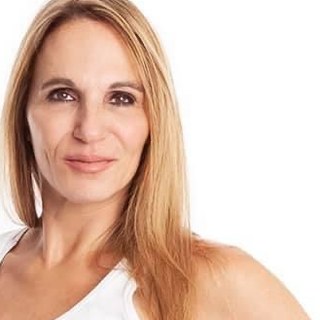
Andrea began researching exercise for breast cancer recovery in 1995, working with the Chiefs of Breast Surgery at Georgetown, George Washington and Johns Hopkins University Medical Centers. She founded CETI in 2004 and has written every edition of the curriculum since. She is a 42-year cancer survivor, holds an MS in Functional Nutrition, and is the author of twenty-one books.
Read Andrea’s story →Fatigue, muscle loss, bone density, nausea, sleep and mood — the mechanism in each case, and how strong the evidence is.
The most consequential topic in the curriculum, and the one where outdated guidance persists longest.
What the trials actually found, and how to answer the question when a client asks.
Research summaries, practice notes and the awareness calendar — sent when there’s something worth sending.