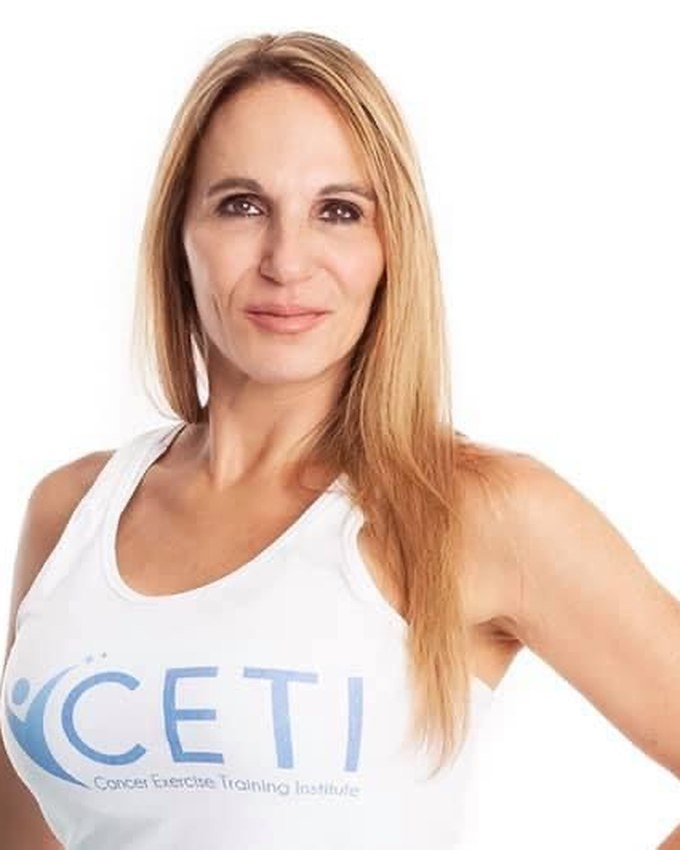
She was diagnosed with cancer at eighteen. Forty-two years later, more people have been trained to work safely with cancer patients by the institute she founded than by any other organization in the world.
42-year cancer survivor · 21 books · MS, Functional Nutrition · PFP/Club Industry Personal Trainer of the Year, 2019
1984
It started with her own diagnosis.
Andrea was eighteen when she was told she had thyroid cancer. She had a complete thyroidectomy followed by radioactive iodine treatment, and came out the other side with a body that no longer worked the way it had — a sluggish metabolism, weight she couldn’t shift, and no one able to tell her what was safe to do about it.
She worked it out herself, over years. That experience — being handed a body you no longer recognize and no map for getting it back — is the thing the entire institute was eventually built to solve.
She graduated from the University of Maryland in 1990 with a degree in criminal justice, realized almost immediately she was in the wrong profession, and became a personal trainer instead.
1992 — 1996
Then it became about everyone else.
She began training at the National Capital YMCA in Washington, D.C., and worked her way up to Director of Personal Training. During those years she built Leading Edge Fitness and a program called EMPOWER — Energizing, Mobilizing, Post-Operative Workout Enhancing Recovery — structured rehabilitative programming for people recovering from surgery.
In 1996 her mother was diagnosed with breast cancer for the second time. Andrea watched her go through multiple surgeries, reconstruction, a frozen shoulder, and a dependence on narcotics to manage the pain that followed.
Nobody could tell her mother what movement was safe. Not the surgeons, not the oncologists, not anyone at the gym. The information simply did not exist in a form a fitness professional could use.
“Cancer strips you of everything: hair, body, self-esteem, confidence, finances, family. As an OncoVie® Cancer Exercise Specialist you have the unique opportunity to help people take control at a time when they feel they have none.”
1995 — 2000
So she went and built the evidence.
Andrea began her research into breast cancer recovery in 1995, decades before exercise oncology was a recognized discipline in the clinical literature. She worked with the Chiefs of Breast Surgery at Georgetown University Hospital, George Washington University Hospital and Johns Hopkins University Medical Centers to write the book that would establish the field.
The result was Essential Exercises for Breast Cancer Survivors, published by Harvard Common Press in 2000 — written so that women like her mother could get their strength, range of motion and self-esteem back after surgery.
That same year she founded The Breast Cancer Survivors Foundation, an Oregon 501(c)(3) public charity supporting survivors and their families.
2004
One trainer can only reach so many people.
That was the arithmetic that led to CETI. Andrea could work with a certain number of clients a week and no more — but if she could teach other professionals what she had spent a decade learning, the reach became something else entirely.
She founded the Cancer Exercise Training Institute in 2004 and developed the OncoVie® Cancer Exercise Specialist curriculum: surgical procedures and their consequences across 26 cancer types plus childhood cancer, treatment side effects, lymphedema prevention and management, assessment protocol, and how every one of those things changes what is safe to program.
The curriculum is revised every two years — a partial rewrite of whatever the research and the treatment landscape have moved. It is now in its fifteenth edition, released in August 2026, running to more than 600 pages.
1984Diagnosed with thyroid cancer at eighteen
1990BA, University of Maryland
1992Begins training at the National Capital YMCA, Washington, D.C.
1995Begins research into exercise for cancer recovery
1996Her mother’s second breast cancer diagnosis
2000Essential Exercises for Breast Cancer Survivors, Harvard Common Press — and the founding of The Breast Cancer Survivors Foundation, an Oregon 501(c)(3)
2004Founds the Cancer Exercise Training Institute
2019PFP/Club Industry Personal Trainer of the Year · ACE partnership begins
2023MS in Functional Nutrition, Rocky Mountain University of Health Professions
2026Named Chief Clinical Education Officer and expert advisory board member at Memios · 15th Edition released — 600+ pages, 20,000+ specialists trained in 60 countries
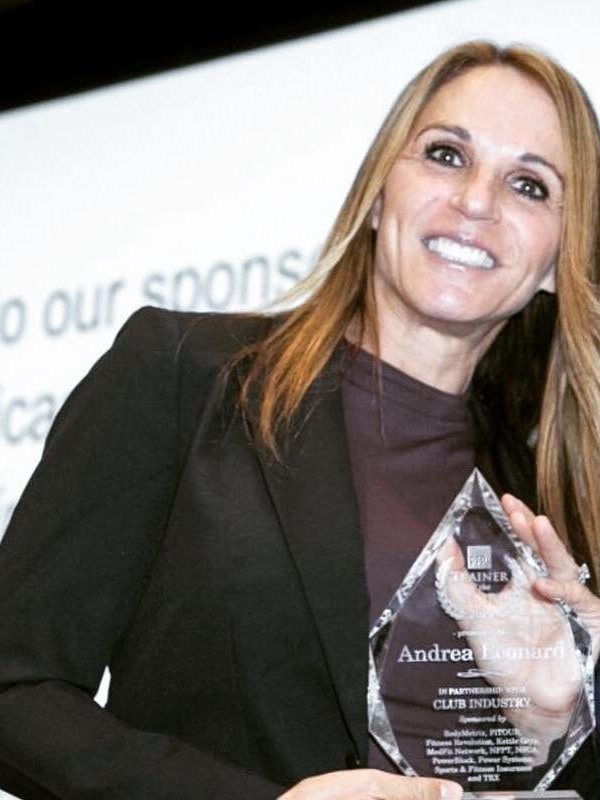
Personal Trainer of the Year, 2019Awarded by Personal Fitness Professional in partnership with Club Industry — the fitness industry’s principal recognition for individual practice.
The award is assessed against three criteria: sustained commitment to clients, evidenced by long-term retention, individualized programming and a documented record of outcomes; contribution to the profession through curriculum development, authorship, teaching and mentorship; and demonstrated influence on standards of practice beyond a single facility.
Recipients are typically practitioners in specialized clinical fields rather than the largest commercial practices. Andrea was recognized in 2019 for her work in oncology exercise, following twenty-four years in the discipline.
Still
This has never been abstract for her.
Andrea has had twenty-four first-degree relatives diagnosed with cancer. She lost her father, Morton, in 2014 to complications of bladder cancer, prostate cancer and myelodysplastic syndrome. Her mother — whose second diagnosis started all of this — is living with stage 4 metastatic breast cancer following a twenty-three-year remission.
Andrea is a 42-year survivor herself.
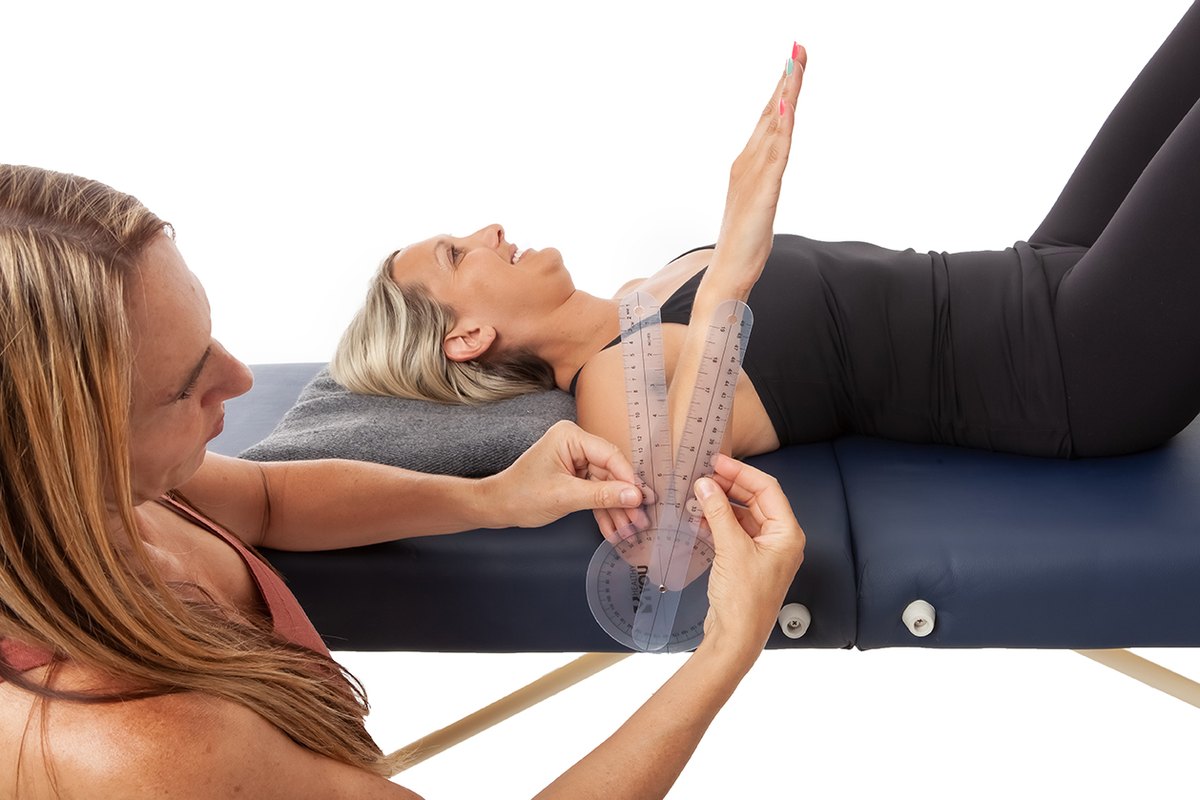
She has navigated cancer as a patient, as a caregiver, and as a clinician-adjacent professional trying to get people the help nobody was offering. That is an unusual combination, and it is why the curriculum spends time on the five stages of grief, on what to say to someone after a diagnosis, on being a caregiver, and on the five stages of grief — alongside the goniometry and the lymphatic drainage protocols.
Credentials
The formal record
MS, Functional Nutrition — Rocky Mountain University of Health Professions, 2023
PFP/Club Industry Personal Trainer of the Year, 2019
Subject matter expert — Medical Wellness Association
Founder & President — The Breast Cancer Survivors Foundation, an Oregon 501(c)(3), 2000
21
books authored on cancer and exercise
1995
the year she began the research that started the field
42
years since her own diagnosis
Teaching & media
Where she has taught
Andrea has delivered CETI workshops and keynote addresses across North America, Europe and Asia.
A snapshot, not the full record. Full references available on request.
IDEA WorldHealthy Aging SummitAsia Fitness ConferenceMedical Fitness TourKaiser Permanente — Thriving with CancerGeorgetown University HospitalJohns Hopkins / Suburban HospitalMemorial HermannSanford Health SystemAvera McKennan Prairie Cancer CenterOHSU School of NursingWinona State UniversityNew York Institute of TechnologyChesapeake Regional Medical CenterSibley HospitalBaptist Health SystemSouthern Nevada VAFort Bliss Army InstallationProvidence Hospital MedfordLoyola Hospital Wellness CenterHighland Park Hospital Wellness CenterSt. Vincent’s Hospital, PortlandBaptist Hospital, NashvilleFunctional Aging SummitMedical Fitness AssociationRowan UniversityCPTN Personal Training ConferenceIHRSA
Her work has been featured in The Washington Post, PFP Magazine, ACE Certified, NASM’s Training Edge, Club Solutions, the Dallas Morning News, The Oregonian and Bethesda Today, and she has been a recurring fitness and rehabilitation expert on AM Northwest.
Why it matters
Why this is worth knowing before you enroll
Most certifications are written by committees working from published literature.
This one was written by someone who was handed the problem personally, went and built the evidence base with three university hospitals because it didn’t exist, published the book, and then spent twenty-four years revising it every two years as the science moved.
That’s why the curriculum knows what to do about a frozen shoulder after reconstruction, and also what to say to a client who has just been told the cancer is back. Both of those came from somewhere.